A turning point was reached in the internal work of our fine vessel. Welding is 95% complete with only a few jobs in the cockpit and transom to complete. As fall has arrived the painting of Eleanor Tarr’s interior metal work has begun ( starting at the bow and coming 7 of 12 frames aft.
Paint prep consists of a full wire wheeling/complete rust-crust removal as well as the extremely tedious removal of tar coating covered in the refit portion of this page, and then a thorough clean with an acetone.
The paint then consists of: 1 coat PPG Sealer (surface tolerant 0% VOC 2 part epoxy sealer) followed by 3 coats of PPG Amerlock 2 (high build 2 part surface tolenrant epoxy paint), alternating between white and grey to ensure coverage, and a 4th coat of Amerlock 2 on all frames, stringers, all corners and intersections of framing and on all plating beneath the waterline. The PPG paint system is the same as used on US Navy and Coast guard vessels among may other steel vessels.
-
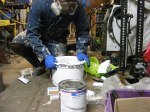
- Mixing 2 part sealer
-

- Wirebrused forepeak
-

- Clear sealer applied in forepeak
-
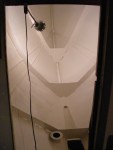
- First coat of white in forepeak
-
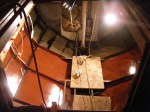
- Clear sealer in saloon
-

- First Coat of White in saloon
-
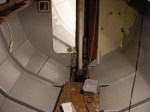
- grey saloon
-

- Third coat of white inching back over coat of grey
-

- Third coat white Forepeak

-
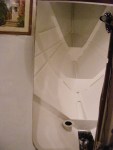
- forth coat white over frames, stringer, junctions and all plating below water line
-

- Forth coat saloon
After all welding and painting is complete, the hull will be insulated above the waterline with polystyrene board, trimmed smaller than it’s intended surface, and sealed in place with polyurethane foam. This leaves each insulating panel some what removable. As our vessel ages there may be need for repair or alteration (welding) which risks fire should the insulation remain in place. This is the primary (and possibly only) disadvantage of sprayed polyurethane throughout hull.


 Sailing Vessel Eleanor Tarr
Yours looks a lot better than mine does. You might be interested to know that my last boat was a Mason Intrepid named Espina. Built back in 1959. I wish I still had her instead of this mess.
http://s111.photobucket.com/user/nebelung/library/Espina%20as%20she%20was?sort=3&page=1
I see you are using Amerlock. Great stuff. If all goes well, I should have the interior cleaned out and repainted by spring. Just have to find a way to keep the skin temp above freezing. (not to mention myself) I’m thinking an electric blanket will work just fine. Last winter it was a bucket of water on the hot plate to keep it warm.
SD was insulated with styrofoam, held on with some sort of cement, like roofing cement. Problem was that the moisture condensed behind the sheets and caused rust because the sheets were not sealed in. I was thinking that putting a vapour barrier over the foam might be a good idea before putting the ceiling in. Your idea of foaming them round the edges might work just as well and be less time consuming. For myself, I’m probably going to go with spray in foam this time round. .
Anyway, nice to see another Mason. Keep on working, I’ll wager you will be in the water soon enough.
Hello Peter, A marvelous blog you have, i’m starting at the beginning and reading towards present. You’re going hard at it, all winter eh??!! Thanks for your words of encouragement, and also the pictures of Espina. I believe the current owner has contacted me regarding all things Intrepid. appears that Espina’s rudder was moved inboard, or perhaps more likely the aft extended. My vessel has a similar rudder location. And you have a nice new Beta too, beautiful. I’m putting an old volvo (similar to your dinosaur) in instead of out. (Budget and what not.)
Eleanor Tarr also used to have styrofoam and roofing tar, really thick roofing tar i describe removing here: https://eleanortarr.wordpress.com/refit/removal-of-interior-inboard-engine-tar-coating/
Great to hear from you, i’ll keep reading, great work!!!